


Senate Bill 68 ADDE
Allergen Disclosure for Dining Experiences
Mandates labeling of the top 9 food allergens on restaurant menus for restaurants in California with >20 locations
Signed into law Oct 13, 2025 in California by Governor Newsom, SB 68 ADDE takes effect July 1, 2026.
Who does it apply to?
- food facilities with 20+ locations in the United States
What is required?
-labeling of the top 9 allergens either on the menu or with a QR code linked to an online resource.
- if utilizing an online resource, must provide an alternative method such as a printed allergen menu or a tablet to present allergen info.

Recent News Coverage
NBC Bay Area - Robert Handa
part 1

NBC Bay Area - Robert Handa
part 2

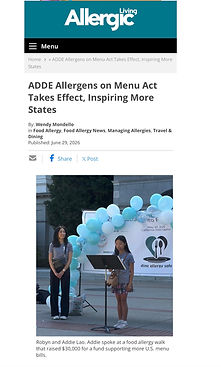
SB 68 ADDE in the News

ABC 10 Interview- Dec 18, 2025
Starting July 1, chain restaurants with at least 20 locations nationwide will be required to list food allergens for each menu item under a new California law. Senate Bill 68, known as the Allergen Disclosure for Dining Experiences or ADDE Act, requires disclosure of the top nine allergens, including milk, eggs, peanuts, tree nuts, wheat, soybeans, fish, crustacean shellfish, and sesame. The law was championed by 9-year-old Addie Lao and her mother, who say dining out with severe food allergies can be difficult and stressful. While restaurant and food allergy groups raised concerns about menu accuracy and operational challenges, amendments allow allergen information to be provided either on printed menus or digitally through QR codes. The bill passed nearly unanimously and was signed into law by Governor Gavin Newsom on October 13.
Interviews


Articles after SB 68 ADDE signed


The ADDE Act (SB68) co-sponsored by Robyn and Addie Lao of AddieTellsAll and. AAFA was signed into law. For the first time in U.S. history, large restaurant chains in California will be required to label the top 9 allergens on menus, starting July 1, 2026. California made history. Now we need to keep going
AddieTellsAll is proud to launch the Dine Allergy Safe Fund, a designated fund of the Asthma and Allergy Foundation of America (AAFA).
Everyone should have the information they need to make empowered choices at the table. This campaign fuels the research and advocacy needed to bring restaurant allergen labeling everywhere to protect the millions of people managing food allergies.
.png)


Sacramento Food Allergy Walk
May 30, 2026 - Past event
The inaugural Sacramento Food Allergy Walk brought together more than 150 walkers at the California State Capitol for a day of connection, education, and advocacy in support of a future where everyone can Dine Allergy Safe.
The event featured inspiring speakers, educational exhibitors, a community walk around the Capitol grounds, a barre warm-up, allergy-friendly giveaways, and opportunities for families, healthcare professionals, advocates, legislators, and industry partners to come together in support of the food allergy community.
We were honored to welcome Congresswoman Doris Matsui and receive media coverage from ABC10 News, helping amplify the importance of food allergy awareness and safer dining.
Thanks to the incredible generosity of our participants, sponsors, and donors, the event co-hosted with a youth-led group Food Sage raised more than $30,000 for the AAFA Dine Allergy Safe Fund. These funds support research, education, and advocacy efforts to expand restaurant allergen transparency and advance safer dining initiatives across the country, building on the momentum of California's landmark SB 68 – The ADDE Law.
The Sacramento Food Allergy Walk demonstrated the power of community and collective action. Together, we celebrated the progress we've made while taking another important step toward a future where every child and adult living with food allergies can dine with greater confidence and safety.
Thank you to everyone who walked, volunteered, sponsored, donated, and helped make this unforgettable event possible. We look forward to continuing this movement together. 💙